Smoking remains a pressing public health issue in Britain, with the NHS estimating that there were 74,600 deaths attributable to smoking in England in 2019 and the Scottish Public Health Observatory recording that there were 8,924 deaths attributable to smoking in Scotland in 2022. Despite decades of warnings over the health harms associated with the habit, smoking persists because of the addictive properties of nicotine, the normalisation of smoking within sections of British society, and the cultural history of the cigarette as an attractive, glamorous product.
The tobacco strand of the Kicking the Habit project will examine the ways in which cigarettes were promoted through an association with elite sport, considering the individual and collective health harms arising out of this activity. From the 1960s onwards, the tobacco industry sponsored various sports in Britain to advertise, sample, and sell its products in exciting settings, sidestep anti-smoking measures, and mobilise influential opinion in the industry’s favour. The sports themselves gained much needed funds, and the mutually beneficial relationship between tobacco and sport continued until the first decade of the twenty-first century.
Tobacco sponsorship of sport in Britain began as the public health case against smoking emerged. In 1962, the Royal College of Physicians published its landmark report Smoking and Health. This identified cigarette smoking as an important cause of lung cancer – a disease whose incidence had risen dramatically in Britain during the preceding decades. The report recommended that preventative measures be introduced to discourage tobacco consumption, including restrictions on advertising. The following year, cigarette manufacturers agreed to adhere to a code which forbade certain advertising themes, such as those which appealed to ‘manliness’ or featured ‘heroes of the young’, and in 1965 cigarette advertisements were entirely banned from British television.
As these changes were taking place, tobacco manufacturers began forming commercial relationships with sports bodies and teams. Rothmans began sponsoring charity cricket matches involving the International Cavaliers – a mishmash team of former English and international cricket players – and, from 1965, the matches gained regular television exposure via the BBC on Sunday afternoons. The games demonstrated the potential of televised sport as a medium through which to promote brand and company names, and other cigarette manufacturers began to invest sizeable sums in sponsoring sport.
Most notably, John Player & Sons pioneered the use of sport sponsorship as a promotional vehicle in Britain, quickly establishing new competitions in cricket, rugby league, golf, and tennis. The most long-running of these was the John Player League cricket competition.
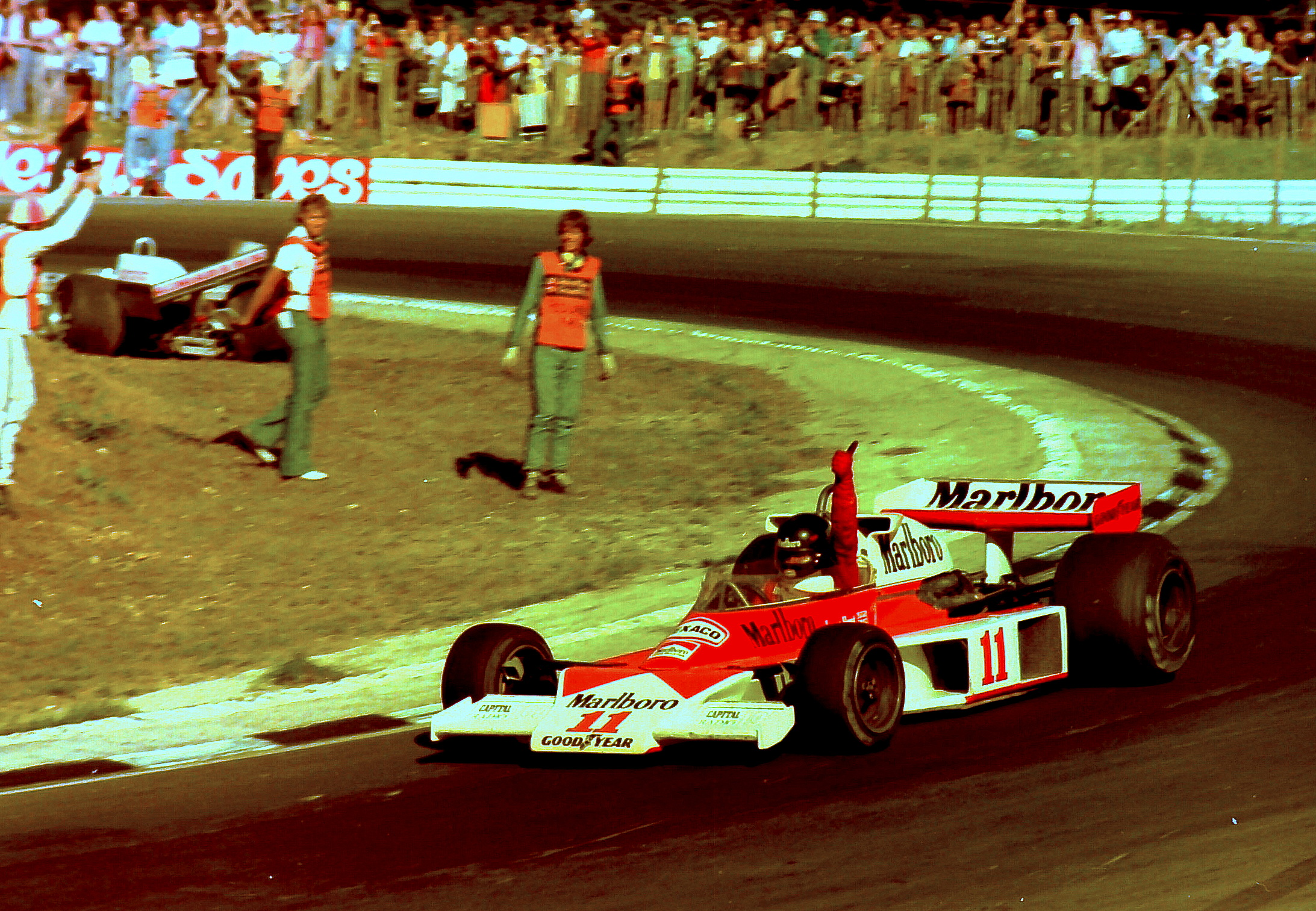
In the realm of Formula 1, John Player & Sons also sponsored Team Lotus from 1968 until 1986. The cigarette manufacturer designed a cigarette brand, John Player Special, partly with its sponsorship of Lotus in mind, with cigarette packets and racing cars both featuring distinctive black and gold colours and insignias to maximise brand awareness. In the decades which followed, other cigarette manufacturers followed suit. For example, from 1974, Philip Morris entered into a long-lasting partnership with the McLaren racing team, with its cars racing in the distinctive red and white chevron design of Marlboro cigarette packets, and used its sponsorship of the British Grand Prix as a key promotional platform when attempting to establish itself in the British market during the late 1970s and 1980s.
As tobacco sponsorship in sport developed, it became the focus of criticism. The pressure group Action on Smoking and Health (ASH), formed in 1971, lobbied government and called for tobacco sponsorship to be ‘phased out’. Inside the government, there was conflict over the issue between the Department of Health and Social Security, which looked to safeguard the nation’s health, and the Minister for Sport, Denis Howell, who hoped to protect sports bodies and the significant revenue they received from tobacco manufacturers. After successfully digging his heels in, Howell negotiated, with the industry, a voluntary code which would govern sport sponsorship by tobacco companies. The code, published in 1978, limited the amount which companies could spend on sport and prohibited events from being closely associated with a specific brand of cigarette. Despite these concessions, the code was a coup for the tobacco industry, who avoided an outright ban and continued to receive precious television exposure via their sponsorship activities.
Imitating the tobacco industry’s tactics, some sports people and teams took an anti-smoking stance at the behest of public health bodies. For the 1982 World Cup, the Scottish health Education Group sponsored the national football team, with players giving up smoking and appearing in an advertising campaign in exchange for £37,500. The campaign was the brainchild of Dr David Player who subsequently became director of the Health Education Council, where he deployed similar methods. Launched in 1984, the ‘Pacesetters Don’t Smoke’ campaign featured sports stars such as the athlete Daley Thompson, the actress Fiona Hughes, and the English football team encouraging young people not to smoke. Television coverage of tobacco sponsored sport reached its zenith during the 1980s as the industry invested heavily in sports such as snooker and darts, a move which reflected how smoking was becoming entrenched amongst working-class Britons as people from other social groups quit.
The series of voluntary codes which regulated tobacco sponsorship was halted by the 2002 Tobacco Advertising and Promotion Act, which banned all cigarette advertising and sponsorship of most sports. ‘Global events’, such as Formula 1 and snooker, were granted an exemption until October 2006. This concession came after Tony Blair’s New Labour government had earlier u-turned on their election pledge to ban all tobacco advertising by announcing that Formula 1 would be exempt from any ban. It was later revealed that Formula 1 boss Bernie Ecclestone had made a £1 million donation to the Labour Party in the lead up to their 1997 election win, with Blair attending the British Grand Prix and being driven around Silverstone racetrack by driver Damon Hill. The episode demonstrates the influence which tobacco money had on sports, with many sports bodies and people becoming staunch defenders of the tobacco industry’s ‘right’ to promote its products uninhibited so long as cigarettes remained a legal product. A directive from the European Union banned all tobacco sponsorship, including in Formula 1, from 31 July 2005.
The story of tobacco sponsorship should have finished there. However, in recent years the tobacco industry has diversified its product range, developing vapes and oral pouches which contain nicotine but not tobacco. Such products are often marketed as aids to smoking cessation, and British American Tobacco (BAT) claims its long-term strategy is to ‘migrate’ smokers from cigarettes to these products and ‘Build a Smokeless World’. Operating in a regulatory loophole, BAT markets its oral nicotine pouches and vapes by sponsoring the McLaren Formula 1 team. Racing cars appear in advertisements, and BAT runs competitions for its customers to meet the McLaren team. The development is a throwback to the heyday of tobacco sponsorship and risks reversing the established trend of declining smoking rates, with smokeless products potentially acting as a gateway to combustible products. Sport sponsorship has, historically, been an appealing way to market products to young people, and the sponsorship of Formula 1 and other youth-focused sports, such as skateboarding, by nicotine companies poses fresh challenges to public health.

Above: Lando Norris drives his McLaren car, complete with oral nicotine pouch branding, at the British Grand Prix, 2022. Image: Timfilbert. License: CC BY-SA 4.0.