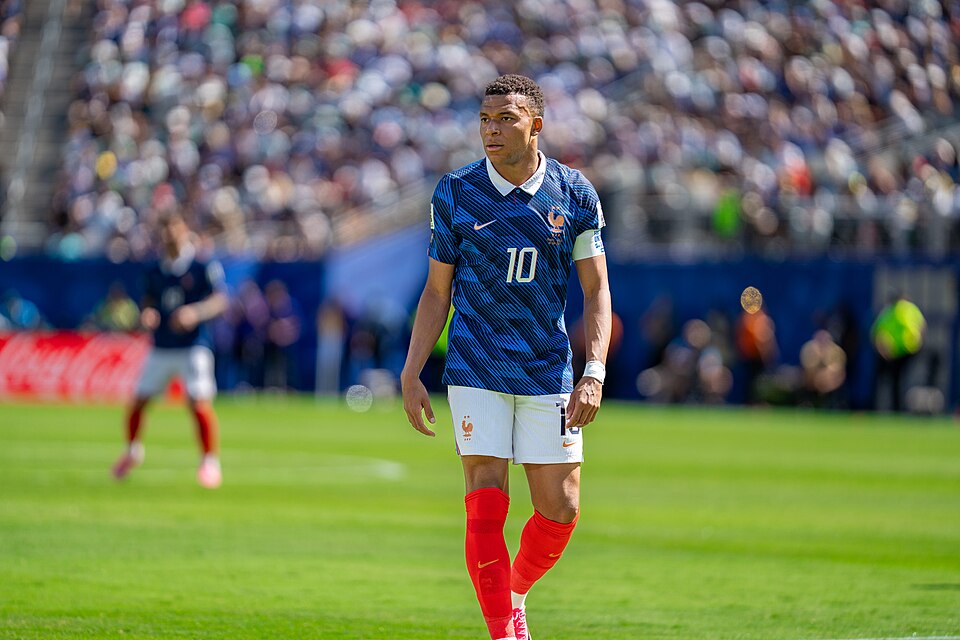
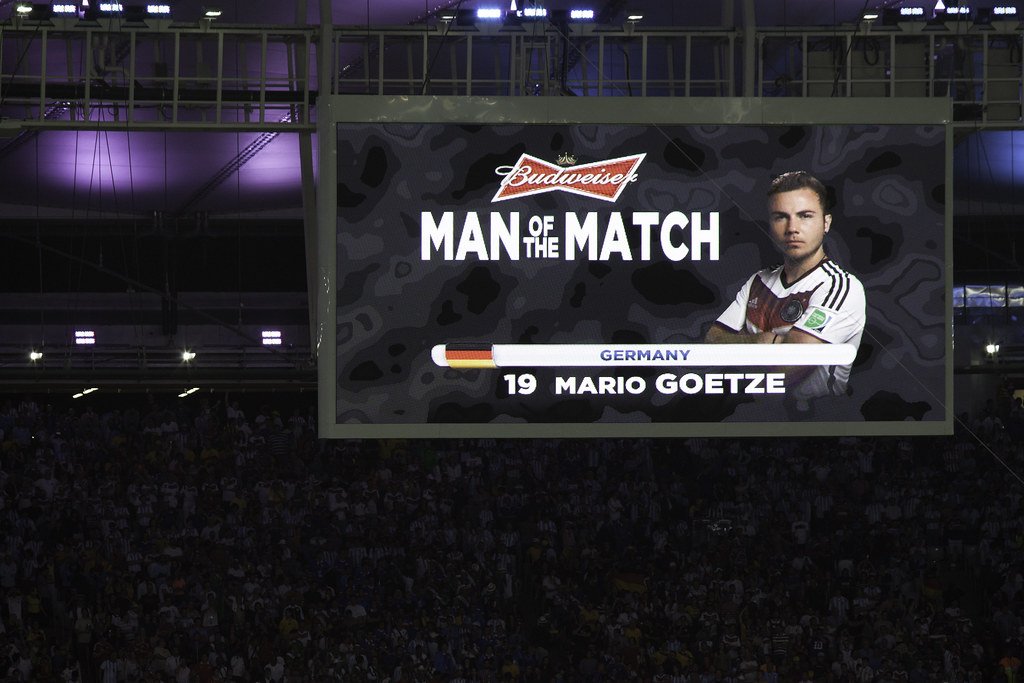
Just before the start of this year’s FIFA World Cup, Real Madrid forward Kylian Mbappé made headlines for objecting to the use of his likeness by the French bookmaker Betclic, an official partner of the French Football Federation. During the previous World Cup, in 2022, Mbappé was also fined for ‘deliberately hiding’ the logo of World Cup sponsor, Budweiser, whilst receiving a ‘man of the match’ award. Whilst the tabloids dismissed such actions as ‘tantrums’, the fact that stars such as Mbappé have felt the need to respond in such ways speaks to the pervasiveness of various forms of addictive sponsorship during the World Cup.
The FIFA World Cup, as well as other “sporting mega events” such as the Olympic Games, have long-been attractive venues for sponsorship. The idea of selling exclusive marketing rights for the World Cup was conceived by the media agency Nally West in the 1970s, with FIFA receiving its first commercial sponsorship – from Coca-Cola – in 1978. Since then, all manner of addictive industries, including tobacco, alcohol, and gambling, have sought to associate themselves with the competition. Brands have also negotiated lucrative deals with individual national teams, in similar bids to curry favour with fans and advertise themselves on the world stage. With the 2026 FIFA World Cup coming to an end, this blog explores how successive waves of addictive sponsorship have co-opted the World Cup to advertise their products. It also reflects on the fact that, even as the World Cup draws to a close for another 4 years, this addictive sponsorship is likely to continue to proliferate (albeit, not without resistance in some quarters).
Tobacco
The tobacco industry has long associated its products with the beautiful game, and the World Cup provided cigarette manufacturers with ample opportunity for promotional tie-ins and sponsorship partnerships.
During the 1978 World Cup, British American Tobacco (BAT) ran a promotion whereby the company promised to contribute funds to the Scottish Football Association (SFA). Using the promotion to publicise its State Express cigarette brand, BAT ‘challenged’ Scotland to win the World Cup, promising to give £100,000 to the SFA if the team did so. In the end, Scotland did not progress past the group stage and earned only £10,000 from BAT for scoring a meagre five goals.
The next two World Cups were sponsored by the US tobacco company RJ Reynolds. The firm reportedly paid FIFA over £5 million to use the 1982 tournament to promote its Winston cigarettes. The partnership prompted some inventive counter-advertising from savvy public health bodies working alongside various national teams. In what represented a change of heart on the smoking issue, the Scottish national team accepted sponsorship from the Scottish Health Education Group to the tune of £75,000. In return, members of the squad gave up smoking and appeared in a publicity campaign wearing t-shirts featuring the slogan ‘Go For Goals’ and no smoking signs.
The Northern Irish team made a similar pledge following criticism from the Ulster Cancer Foundation of their 1982 World Cup mascot, ‘Yer Man’ – a cartoon rendering of a supposedly stereotypical Northern Irish man, complete with flat cap and cigarette in his mouth. The team appeared in posters for schools, imploring children to “Join Our World Cup Squad – Don’t Smoke”.
Not to be outdone, England teamed up with the Health Education Council ahead of the 1986 World Cup. Players such as Glen Hoddle and Kerry Dixon wore England shirts emblazoned with the message ‘Pacesetters Don’t Smoke’ and the Football Association received £25,000 for its participation. The anti-smoking campaign was aimed squarely at young people and featured athletes such as Daly Thompson and the actor Finola Hughes. England manager Bobby Robson instructed youngsters ‘to save their money instead of squandering it on smoking… buy a pair of football boots and play the game’.
FIFA heeded public health messages like these only belatedly. Following the 1986 World Cup, the organisation said it would no longer accept tobacco sponsorship. The organisation has also banned tobacco use at World Cup venues since 2002, a suspension of this policy during the 2006 World Cup in Germany notwithstanding. In 2017, this ban was extended to e-cigarettes and vapes.
FIFA has, so far, resisted the lure of nicotine pouch sponsorship which has become a recent feature of other sports, such as Formula One. Nevertheless, pouches have been spotted at the 2026 World Cup. An image from inside the French team’s dressing room showed a nicotine pouch tin placed next to Michael Olise’s items. There is an irony in one of France’s star players being fuelled by nicotine pouches as the country banned the products in April of this year.
Olise’s habit reflects a wider trend for the use of nicotine and tobacco products amongst professional footballers. A 2024 survey by Loughborough University and the Professional Footballers’ Association found that around 20% of professional players in England use pouches containing either tobacco (snus) or, more commonly, nicotine. This percentage was well above the equivalent figure for use amongst the general British population (1%), and players stated that the products helped with mental preparedness before a game and relaxation afterwards. Such findings show a degree of consistency with historic statistics. After the 1982 World Cup, FIFA’s doping control committee revealed that nicotine was found in just over 26% of samples taken from players at the tournament. Such evidence suggests that football has a long-standing nicotine addiction which it is yet to fully shake.
Alcohol
Unsurprisingly, alcohol companies have enjoyed long and incredibly lucrative relationships with the World Cup and various national teams in the United Kingdom and the Republic of Ireland.
AB-InBev’s Budweiser, for instance, has been a major World Cup partner since the 1980s, a fact which has led to several notable controversies over the years. The most recent of these was the ban on alcoholic beverages being sold in stadiums during the Qatari World Cup, and the problems this posed for AB-InBev’s ability to exercise its pourage rights. A similar issue also arose during the 2014 World Cup, but FIFA managed to persuade the Brazilian Government to ease its restrictions on alcohol sales in stadiums. Alcohol sponsorship deals could also lead to some unexpected spectacles. In 2006, 1000 Dutch fans were forced to remove Lederhosen bearing the name of a competing alcohol brand, to preserve Budweiser’s exclusive marketing rights during the World Cup in Germany.
Beyond the World Cup itself, various national sides have also engaged in sponsorship deals with alcohol companies. Perhaps the first of these was Scotland, who were sponsored by Tennent’s Caledonian Brewery during the 1974 World Cup in West Germany. In addition to serving as the team’s official sponsor, Tennent’s also offered up to £115,000 if the national side won the tournament. Whilst they were unceremoniously knocked out in the group stages, the team still received £10,000, presented to Scotland manager, William Ormond, during a public ceremony hosted by the brewery in Edinburgh. Tennent’s would return as the national teams’ sponsor for the 1978 Argentinian World Cup and have remained so ever since.
Meanwhile, to celebrate the Republic of Ireland qualifying for the World Cup for the first time in 1990, Guinness released its, ‘The World’s Cup … well in hand’ advert. Guinness’s parent company, Diageo, have since revived this line in its recent ‘Singing Pints’ campaign, in which two pints of Guinness scream ‘gggoooaaalll’, before the words ‘The world’s cup’ appear on screen. In addition to sponsoring the national side as their official beer in 1990, Guinness also worked with then-Republic of Ireland manager and former England great, Jack Charlton, as its official Guinness Soccer Ambassador, engaging in a range of media and consumer promotions.
Of all the national sides, however, the England team has had the most expansive relationship with alcohol companies. This began with Carlsberg, which paid an estimated £30 million pounds to become one the England team’s five commercial partners in 2002. In turn, Carlsberg used its relationship with the England team as a central part of its marketing campaigns in the lead up to 2006 and 2010 World Cups.
The first example of this was the 2006 ‘Old Lions’ ad, created by the ad-agency Saatchi & Saatchi, in which a team of past England greats, coached by Sir Bobby Robson, play a Sunday league football match against the ‘Dog & Duck’. After a thorough thrashing of the other side, the team return to the ‘Old Lion’ for a celebratory pint of Carlsberg. The advert ends with a variation on the brand’s tagline: ‘Carlsberg don’t do pub teams but, if they did, they’d probably be the best in the world.’
Four years later, Saatchi & Saatchi would follow this up with the ‘Team Talk’ advert, in which a faceless England squad receive a rousing, almost jingoistic, half-time talk. As they make their way from the dressing room to the pitch, half time talk still ringing in their ears, the team are cheered on by a who’s-who of British sporting and cultural greats in the tunnel, including cricketer Sir Ian Botham, athlete Dame Kelly Holmes, and then-Kasabian frontman Tom Meighan (with the instrumental from the band’s single, “Underdog”, playing in the background). The ad then ends with a further variation of the brand’s tagline, ‘If Carlsberg did Team Talks’, leaving the audience to fill in that ‘they’d probably be the best in the world.’ Carlsberg continued its relationship with the England side until the 2018 Russian World Cup, when it was replaced shortly thereafter by Budweiser, which remains the ‘official beer partner’ of the England squad to this day.
Last, but not least, the Football Association of Wales signed a deal with Carling in 2023 to become the official lager of the Cymru national football team. This has since generated parasocial promotional videos such as ‘Get to know the Cymru squad with Carling.’
This firm relationship between the alcohol industry and the World Cup also seems set to continue, even in the face of changing consumer tastes. In light of declining beers sales in the US, for instance, companies such as AB-InBev have began to pivoted towards the promotion of low and no-alcohol products during this year’s tournament. Whilst such products provide an ostensibly ‘safer option’ for a ‘sober curious’ generation, they nevertheless help to promote such products – increasingly indistinguishable from their alcoholic counterparts – on the global stage.
Gambling
Although it took 92 years for the World Cup to get its first official gambling sponsor, the digital restrictions as well as discreet nature of online sports betting, unlike smoking or drinking, has permitted fewer global restrictions throughout the 2026 tournament.
For example, the Greek founded company Betano serves as an official ‘Tournament Supporter’, in a regional sponsorship deal which covers Europe and South America. Its logos can be seen on hoardings during coverage of the World Cup even in countries where it is illegal to televise gambling branding, such as Belgium and the Netherlands. In addition, the 2026 tournament, held in the United States, Mexico, and Canada, is the first to have an official ‘Prediction Market Partner’ in ADI Predictsheet. The move reflects the popularity of prediction markets amongst US consumers and represents a significant turnaround in the acceptance of sports betting in the US. Only four states legally permitted sports betting in 2016. As of 2026, this rose almost ten-fold to thirty-nine.
At the national level, by contrast, the history of World Cup gambling promotions in Britain was more gradual and has resulted in more resistance. In 1998, William Hill fast-tracked the launch of their first website to allow non-UK residents, along with the UK, to bet on the World Cup. By 2002, they became the second ‘Top World Cup advertiser’, based on the number of ad-viewers during the tournament, surpassed only by competing bookmaker, Ladbrokes. William Hill continued to expend significant capital on World Cup marketing, particularly once the government legalised television advertising, implemented in 2007. As a result, William Hill became the first official betting sponsor for the England national football team in 2012. Spanning two-and-a-half years—and without public controversy or complaints — the contract ended at the end of the 2014 World Cup in Brazil.
William Hill’s World Cup sponsorship reflected a broader trend within gambling and football commercial relations at the time; gambling sponsors across all football leagues became highly visible and therefore scrutinised by fans around the mid-2010s. Nonetheless, the English Football Association (FA) signed a four-year contract with Ladbrokes in 2016. With this, Ladbrokes should have been the England national team’s second official betting partner for the 2018 World Cup, but the FA terminated the contract in 2017, following complaints and ethical concerns. In particular, the FA decided it was inappropriate to profit from sports betting whilst developing stricter monitoring and disciplinary rules to halt the rise in football players who were harming the football economy through match fixing.
Although the FA has ended gambling sponsorship of England’s national teams, betting companies continue to dominate the World Cup through blockbuster marketing campaigns, generating substantial profits while exposing more people to gambling harm than at any other point in the sporting calendar. Both the World Cup itself, as well as various national teams, have therefore had long and lucrative relations with various forms of addictive sponsorship. This relationship also seems set to continue, with CBC describing sports betting as the ‘biggest winner’ of this year’s World Cup. As the example of Kylian Mbappé suggests, however, not everyone is happy with the current status quo. Others, for instance, have criticised Bet365’s sponsorship of Australian broadcaster SBS’s World Cup coverage, arguing that this allows the company to sidestep a ban on gambling advertising during live sport in Australia. Similarly, a recent article in the Lancet has criticised the pervasive presence of alcohol brands during the World Cup, noting the competition’s role in ‘facilitating the mass marketing of alcohol.’ Thus, whilst ‘addictive sponsorship’ is set to continue to be the biggest winner at the World Cup, it also seems likely that this position will continue to be resisted.